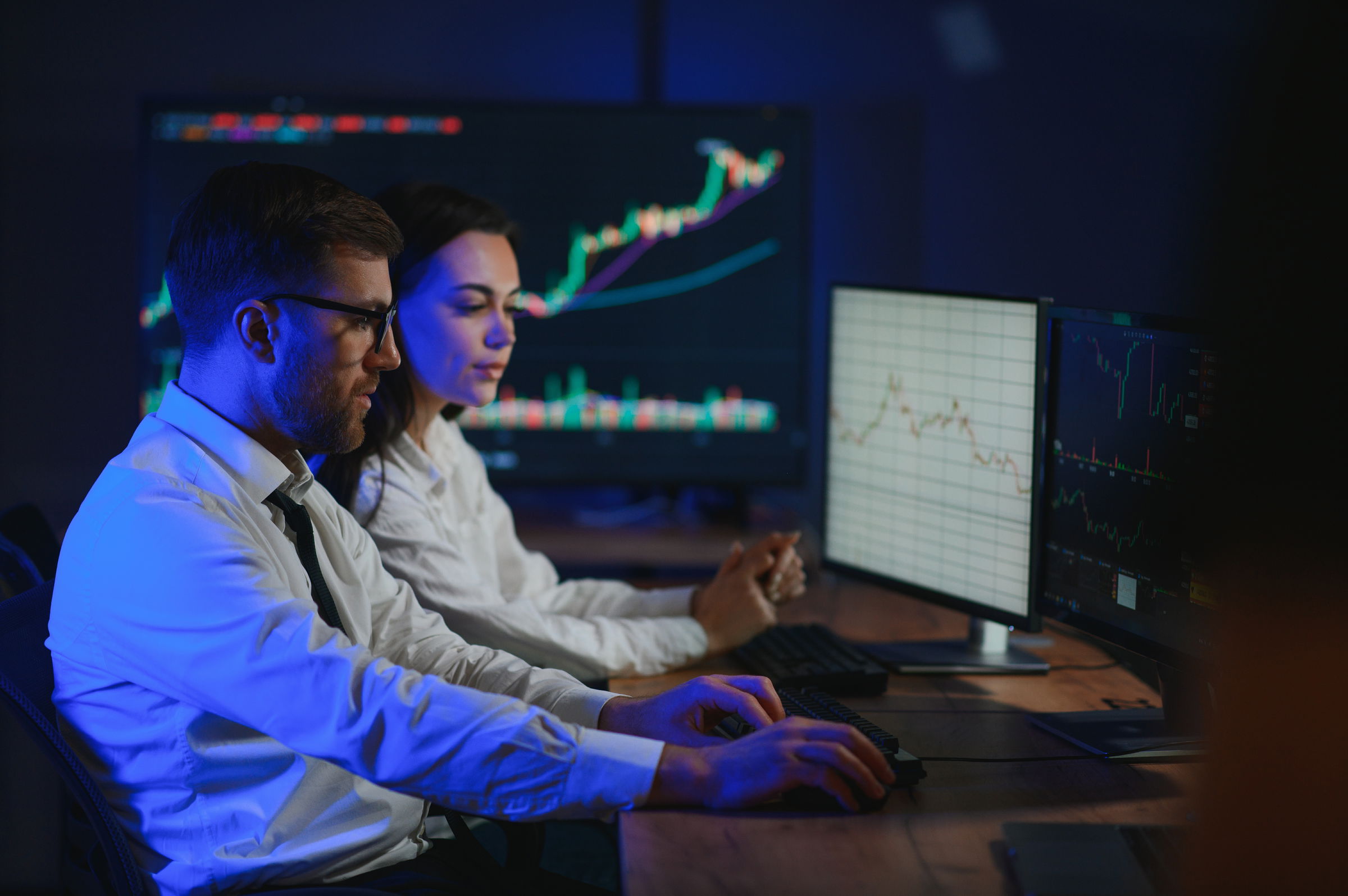
How to Learn Trading & Make a Career Out of It

Is it possible to become a full-time trader?
Let’s be honest: short-term trading is not for the faint of heart. While social media and some online voices might make it sound easy, the reality is that the market demands respect.
However, success is achievable. The key distinction is that while anyone can learn to trade, not everyone is willing to do the work. Your success hinges on two things: cultivating a teachable mindset and committing to hard work on the fundamentals. No advanced degree is required, just dedication and discipline.
While ambition is helpful, view trading as a long-term lifestyle choice, not a way to get rich overnight. It’s common to spend six months to a year gaining the necessary skills and experience, but once you reach that professional level, the potential for an excellent living is significant.
Learning the Fundamentals of Short-Term Trading
If you skip the critical step of taking the time to learn trading and master the unique strategies and techniques required for your chosen approach, you are almost certain to lose money. Fortunately, you can begin your trading career on a part-time basis.
Many professional traders started exactly this way; as a serious hobby. Gaining the skills and discipline needed before they transition to full-time income.
A comprehensive training program can help you acquire this knowledge in a streamlined fashion, while a training simulator allows you to master your skills to become a trader.
What we teach at the Academy
There are five seperate modules in our training materials:
- The Basics.
- The Basics of P8 Software
- Advanced P8 Software
- First Trades
- Real Trades
The Basics
This module is your absolute prerequisite. We establish a robust theoretical foundation for short-term trading. You’ll learn the core concepts that all successful traders rely on, regardless of their specific strategy.
As a trader, you need to learn the terminology of trading, including bid/ask (buying and selling prices), volume (how much of an asset is being traded), market orders (instructions to buy or sell at the best price), limit orders (instructions to buy or sell at a fixed price), and many more you can learn to use at TraderTV Academy in our Basics module.
Basics of P8 Software
After you understand the basics of the market, it’s time to learn your instrument. P8 is more than software! It’s your cockpit, your workspace, your lens into the market’s movement. In this module, you’ll learn to navigate its core functions: stock windows, time of sales, keyboard shortcuts, and trade history.
Advanced P8 Software
Once you’ve mastered the basics, we move deeper, into the art of precision. Our advanced P8 training is about refining your edge: using charts, order types, and specialized tools to trade with speed, discipline, and clarity. You’ll learn how to manage risk dynamically, track performance in real time, and adapt your execution to market conditions.
This is where you start thinking like a professional, balancing instinct with structure, speed with patience. Mastery here means not just knowing what the tools do, but how to make them work for your unique trading rhythm.
First and Real Trades
Here theory meets technology. This module focuses on setting up and navigating the specialized trading environment you will use to practice and execute trades.
This is where you begin to apply your knowledge and test your strategies in a safe, risk-free environment. Practice implementing simple, high-probability strategies in a simulated trading environment. You will focus exclusively on disciplined execution and mastering the entry and exit process using the P8 software, tracking your performance without risking real capital.
Questions about Short-Term Trading
Lately, our YouTube comments and messages have been flooded with the same excellent questions from people eager to dive into the world of trading. It’s clear there’s a real hunger for grounded, practical advice to help cut through the market noise.
To start your journey, let’s address some of the most common uncertainties people have when they dive into the world of short-term trading.
Can I learn to trade on my own?
While a self-led learner can certainly acquire all the necessary trading knowledge, knowledge isn’t everything. True skill development requires applying that information in realistic trading environments to bridge the gap between theory and practice. With TraderTV Academy, you gain access to the P8 software specifically designed to let you hone your skills and learn to distinguish effective strategy from textbook theory.
How long does it take to learn trading?
This depends on your commitment and discipline to follow your plan. By following a proven training program like TraderTV Academy, you could start making live trades within six months.
Most traders take closer to a year before they acquire the skill to trade full-time and pay their bills. Be wary of anyone who claims they can teach you faster or help you get rich overnight. The truth is this is a continous journey not a sprint.
Why continous learning is the most important?
The formula for learning to trade and establishing a profitable career is simple: relentless learning and dedicated practice. Master these two things, and you’ll possess the skills to achieve your aspirations.
The challenge is that the vast majority of people who attempt trading quit when difficulty arises. Expect string of losing trades or emotional setbacks. You will deffinetly experience some hard times but the secret to pushing past these hurdles is understanding they are not failures, but simply the cost of doing business as a trader.
At TraderTV Academy we strive for giving you everything you need to learn trading and make a career out of it!